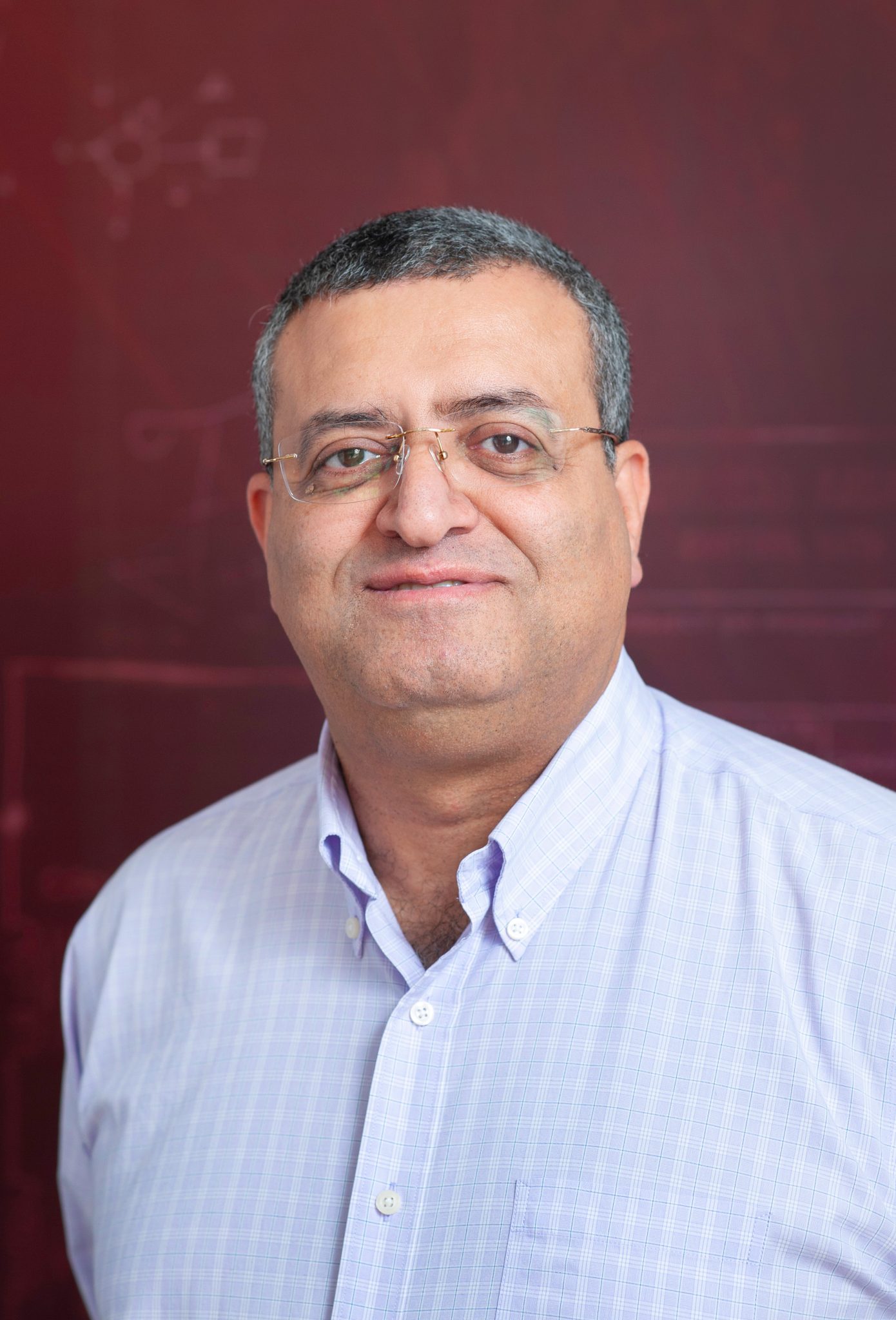
Abstract: The need to manage and analyze spatial data is hampered by the lack of specialized systems to support such data. System builders mostly build general-purpose systems that are generic enough to handle any kind of attributes. Whenever there is a pressing need for spatial data support, it is considered as an afterthought problem that can be addressed by adding new data types, extensions, or spatial cartridges to existing systems. This talk advocates for dealing with spatial data as first class citizens, and for always thinking spatially whenever it comes to system design. This is well justified by the proliferation of location-based applications that are mainly relying on spatial data. The talk will go through various system designs and show how they would be different if designed while thinking spatially. Examples of such systems include big data systems, data cleaning systems, and machine learning-based systems.
Bio: Mohamed Mokbel is a Distinguished McKnight University Professor at the University of Minnesota. Prior roles while on leave/sabbatical from UMN include Chief Scientist of Qatar Computing Research Institute, Founding Technical Director of GIS Technology Innovation Center in Saudi Arabia, and multiple times Visiting Researcher at Microsoft Research, USA. His research interests include database systems and spatial computing. Mohamed was recognized by the VLDB 10-Year Test-of-Time Award for his work on location privacy, the IEEE ICDE 10-Year Influential Paper Award for his work on big spatial data, the ACM SIGSPATIAL 10-Year Impact Award for his work on location-based social networks, and was short listed for another ACM SIGSPATIAL 10-Year Impact Award for his work on microblogs data management. Mohamed is the Editor-in-Chief for ACM Transactions on Spatial algorithms and Systems (ACM TSAS), and is/was on the Editorial Board of ACM Books, ACM TODS, and VLDB Journal. He has served as the elected Chair of ACM SIGSPATIAL, and PC Co-Chair for ACM SIGMOD and ACM SIGSPATIAL. Mohamed is an ACM Fellow and IEEE Fellow.
Resumo: Data lakes emerged in the early 2010s as repositories to collect raw, unstructured data at scale — as organizations recognized the untapped value of this messy data. The study of data lakes has evolved and matured shaping how we store, manage, and extract insights from these massive heterogeneous information stores. Data Lake research is shaping data management outside and with the DBMS. We are now seeing the emergence of modellakes, repositories of large sets of pre-trained AI models. In this talk, I present a vision for the management of model lakes and consider how the application of principled data management can do for understanding and using AI models.
Bio: Renée J. Miller is a Professor and Canada Excellence Research Chair in Data Intelligence at the Cheriton School of Computer Science at the University of Waterloo. Renée is a Fellow of the Royal Society of Canada, Canada’s national academy of science, engineering, and the humanities. She received the U.S. Presidential Early Career Award for Scientists and Engineers (PECASE), the highest honor bestowed by the United States government on outstanding scientists and engineers beginning their careers. She also received an NSF CAREER Award, the Ontario Premier’s Research Excellence Award, and an IBM Faculty Award. She has been named the Bell Canada Chair of Information Systems and is a Fellow of the ACM and AAAS. Her work has focused on the long-standing open problem of data integration and has achieved the goal of building practical data integration systems. She and her colleagues received the ICDT Test-of-Time Award and the 2020 Alonzo Church Alonzo Church Award for Outstanding Contributions to Logic and Computation for their influential work establishing the foundations of data exchange. For her body of work, she has received the CS Canada Lifetime Achievement Award in Computer Science. Professor Miller served as president of the non-profit Very Large Data Base (VLDB) Foundation and an Editor-in-Chief of the VLDB Journal.
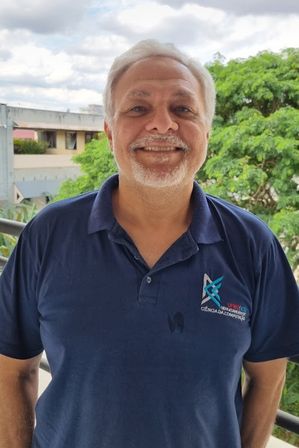
Resumo: Como permanecer cientificamente relevante em uma área que se reinventa a cada segundo? Nesta palestra, mergulharemos em uma jornada de 30 anos de carreira para revelar que a verdadeira consistência na computação não vem de seguir a próxima onda tecnológica, mas de aprofundar as perguntas estruturais que sobrevivem a elas. Abandonando a ideia de uma trajetória linear ou cíclica, apresento a metáfora da espiral: um modelo de evolução onde cada nova fase — de modelagem formal e learning to rank até a responsabilidade algorítmica e saúde — não é uma ruptura, mas uma expansão de impacto e rigor. É um convite para olhar além dos frameworks do momento e entender a ciência como um projeto de acúmulo, onde a tecnologia muda, mas a busca por fundamentos, ética e densidade institucional permanece vertical.
Bio: Professor Titular Departamento de Ciências da Computação – UFMG. Recebeu diversos prêmios e homenagens ao longo da carreira, incluindo vários prêmios em Concursos de Teses e Dissertações nacionais, destacando-se dois Prêmios CAPES de Teses (2024, 1o lugar, orientador; 2020, Menção Honrosa, co-orientador) e vários prêmios de melhor artigo. Atua na área de Ciência da Computação com ênfase em Recuperação de Informação, Aprendizado de Máquina e Processamento de Linguagem Natural. Já publicou mais de 400 artigos com revisões por pares nessas áreas de pesquisa. O seu h-index é de 61 (Google Scholar) com mais de 15.000 citações, figurando no Ranking de Stanford como um dos cientistas mais influentes do mundo. Foi General Chair da ACM/IEEE Joint Conference on Digital Libraries (2018), é Senior Committee Member das principais conferências da sua área de atuação (ACM SIGIR, ACL, ACM RecSys, ACM CIKM, ACM WSDM, ECIR, etc). Também é Senior Editor do Journal of the Brazilian Computer Society, responsável pela área de Recuperação de Informação e Sistemas de Recomendação, e e é membro do corpo editorial do Transactions of the Association of Computational Linguistics (TACL). Foi Membro Afiliado da Academia Brasileira de Ciências (mandato de 5 anos), é Bolsista de Produtividade do CNPq (nível 1-A), ex-Membro titular da Câmara de Ciências Exatas (CEX) da FAPEMIG, e Coordenador do Instituto Nacional de Ciência e Tecnologia (INCT) em Inteligência Artificial Responsável para Linguística Computacional e Tratamento e Disseminação de Informação – INCT-TILD-IAR.